Jurisdictional licence
A Red Seal or Safety Ticket Is Not a Global Permission Slip
Trades credentials can make competence more legible and support mobility. They do not remove local scope, safety, employer and licensing decisions.
What the wrapper says
Trades training records capability through qualifications and safety tickets, while occupational licensing and employer rules decide the local permission attached to particular work.
The all-clear
Trade standards, safety tickets, and portable endorsements make structured capability visible to workers, employers, and regulators.
What is durable
The ability to execute trade tasks, make safety-relevant decisions, and recognise when escalation is required.
Somebody wants one field called qualified_for_deployment.
Fine.
Great.
One reassuring Boolean, settling trade capability, legal permission, equipment familiarity, site induction and expiring safety requirements.
Open TRADES_COMPLIANCE_MASTER_v14_FINAL_FINAL.xlsx.
A Construction Electrician has a Certificate of Qualification.
There is a Red Seal endorsement.
There is a Working at Heights card.
The staffer is experienced, sensible, and regrettably for the spreadsheet, not a set of interchangeable badges.
Then your project manager asks whether the person can be assigned tomorrow.
Your database says yes, because one column says Red Seal.
This is how a portable signal becomes a global permission slip.
Trade capability, legal scope, employer authorisation and current safety coverage are four different objects.
They meet on every job.
They should not be stored as though they are one thing.
The Red Seal has a precise job
The Red Seal Occupational Standard is not vague about the work it describes.
Developed under the Canadian Council of Directors of Apprenticeship, it covers 54 designated trades.
It breaks a trade into Major Work Activities, tasks and sub-tasks, then weights training and examination against those activities.
For Construction Electrician, Services, Distribution Systems and Branch Circuits carries 22 to 28 percent of examination questions.
Motors and Control Systems carries 16 to 22 percent.
That is a real competency architecture.
It is not a gold sticker applied after somebody nodded convincingly near a panel board.
The training pathway matches it.
Four technical blocks.
Roughly a thousand hours of classroom instruction by Level 4.
Field experience alongside a sponsoring employer.
The Interprovincial Red Seal Examination then runs 100 to 150 multiple-choice questions, in a four-hour limit, at a 70 percent threshold.
Those facts are what make the endorsement valuable.
They give you a shared signal that a person met a defined trade standard, and they support interprovincial journeyperson recognition without further testing.
Under the described programme.
That last phrase is the whole article.
An endorsement does not configure a variable-frequency drive on a particular site.
It does not inspect a local hazard.
It does not choose the supervision arrangement.
It does not establish that an employer completed the authorisation a particular assignment requires.
And it does not make a provincial or site rule disappear because the red foil looks unusually decisive in a PDF preview.
The safety ticket has a different job
Take Ontario’s Working at Heights training.
Under the Occupational Health and Safety Act and Construction Projects Regulation, O. Reg.
213/91, an employer cannot allow a worker on a construction project to work at heights without documented proof of training approved by the Chief Prevention Officer.
That is not a learning recommendation.
It is an employer-facing condition attached to covered work.
The approved programme is specific about delivery.
An eight-hour scheduled course.
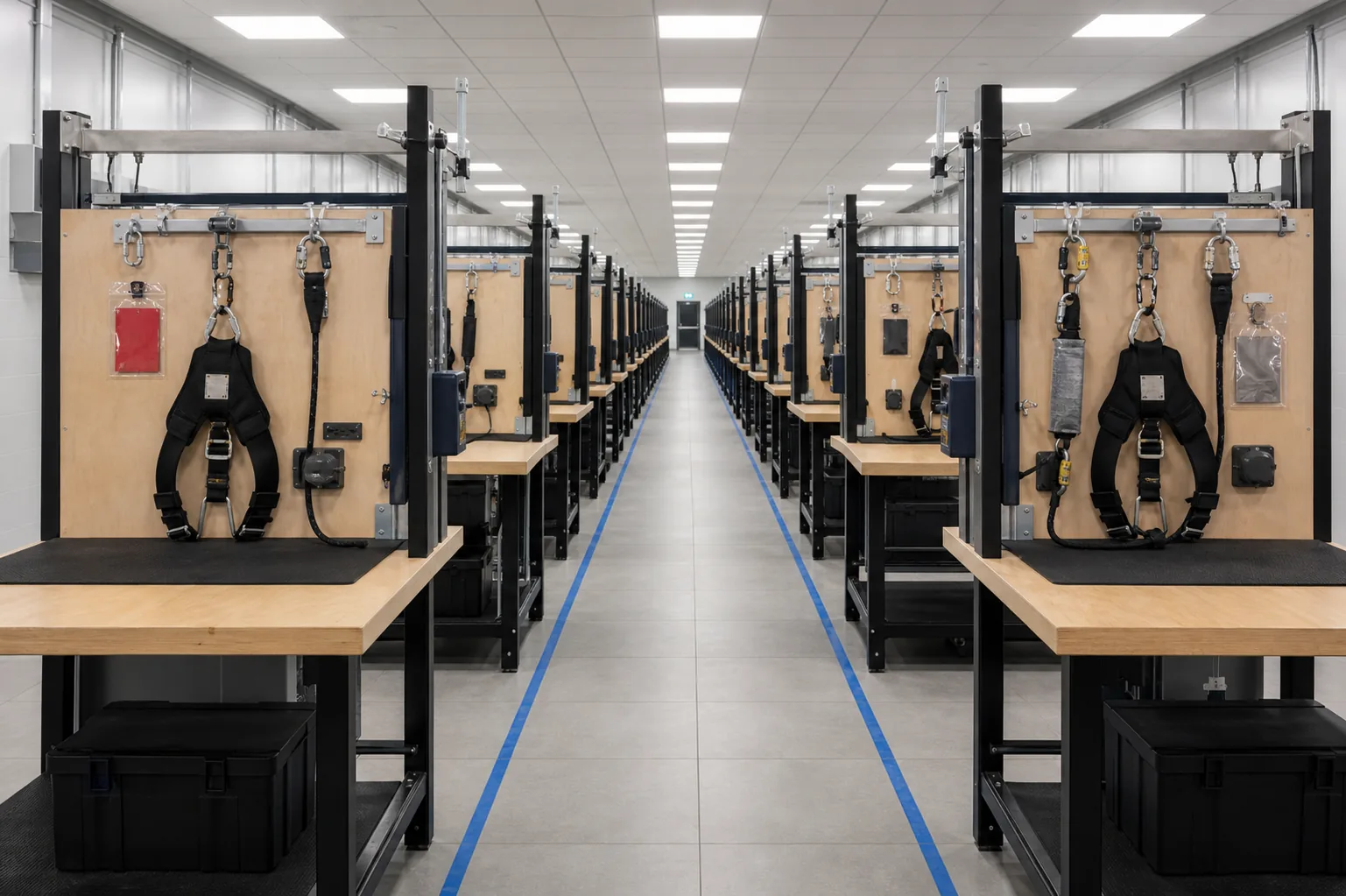
Practical work on harness fitting and anchor inspection.
A practical ratio capped at one instructor to 12 participants.
An approved refresher before expiry.
The card expires after 36 months.
The trade qualification does not expire alongside it.
But the work authorisation depends on current compliance with the named programme.
This is the distinction that vanishes during your data consolidation.
One record says electrician.
One says Red Seal.
One says fall protection.
Then an integration consultant sensibly asks for a canonical credential field, and nobody has a spare afternoon to explain the difference between a trade standard and an access condition.
So your values get flattened.
And later your system identifies a person with a permanent Certificate of Qualification and an expired height ticket as qualified for a height-related assignment.
Nothing happened to that person’s ability to reason about electrical work.
The data model made a compliance decision by accident.
Legal permission is a local decision
Occupational licensing is built on a similar separation.
A practice act can protect a title, reserve particular work, or both.
Title protection limits who may use a designation.
Practice exclusivity limits who may perform defined work.
Different controls.
Different consequences.
United States boards can issue cease-and-desist orders and assess civil penalties of $1,000 to $10,000 per violation day.
The point is not that every trade assignment is a prosecution waiting to happen.
The point is that a credential is evidence inside a rule system.
It is not the rule system.
The Ontario example gives the operational version.
The regulator approves the programme.
The provider runs it and submits its roster within seven calendar days.
The worker presents documented proof.
The employer decides whether the assignment can proceed under the local rule and the job conditions.
Four institutional actors.
One person.
One very ambitious credential field.
So your deployment question should be ordinary and boring.
Does this person have the capability evidence, the relevant qualification, current safety coverage, and the local authorisation for this task, this equipment, this site?
If the answer is not available, the right system response is not a green tick.
It is a check.
The standards and the tickets have earned their place
None of this argues against Red Seal endorsements, Certificates of Qualification or safety tickets.
They solve real problems, including several of yours.
The Red Seal Occupational Standard gives apprenticeship programmes a common frame.
A candidate must clear independent theory and shop thresholds, and an 85 percent theory result does not offset a 65 percent shop result.
That examination standard makes capability more visible than an employer’s recollection of who handled the last difficult shutdown.
The Trade Qualifier pathway is useful for the same reason.
A worker outside a registered apprenticeship can document 1.5 times the normal apprenticeship experience, supported by employer declarations, tax records and competency verification.
It makes experience legible without pretending every capable worker took the same route.
Safety tickets have an equally proper purpose.
The programme names the provider, the course, the practical components and the renewal trigger.
That lets you establish current completion of a requirement, instead of asking whether somebody once took “something about fall protection” around the time of the previous reorganisation.
Keep the standards.
Keep the tickets.
Keep your audit trail.
Just do not ask them to become a universal ontology of permission.
AI will make the shortcut look responsible
Trade labels emerged under programmes.
Safety tickets emerged under named regulatory rules.
Employer authorisations emerged from the actual work being assigned.
Then a workforce platform arrives and asks what credential = Red Seal means.
The honest answer is that it depends on the trade, the issuing programme, the jurisdiction, the effective record, the task, the equipment and your deployment rule.
Which is not satisfying if the product team promised instant skill-based staffing before the roadmap review.
So the model gets one credential field.
It sees Red Seal and Working at Heights in the same vocabulary of qualifications. It infers that a portable endorsement is portable permission.
That a safety card is a general capability statement. That a current qualification makes a site-specific check redundant.
That is not artificial intelligence behaving badly.
That is a data contract handing over a noun where the decision needed relationships.
A tool may reasonably surface candidates with a Red Seal endorsement. It may flag a height ticket nearing its three-year point.
It should not decide, from either field alone, that a worker is authorised to perform a particular task on a particular site.
The consequence here is not a fussy taxonomy correction.
A wrong inference puts your authorisation, and a worker’s deployment status, on the wrong side of a live rule.
Store the evidence in layers
Your remedy is less glamorous than a single readiness score, which is encouraging.
Keep a capability record for the durable object: the trade tasks the person can perform, the safety judgment they have demonstrated, and the conditions in which they escalate.
Keep a qualification record separately: Certificate of Qualification, Red Seal endorsement, issuer, programme or standard, credential number, issue date, jurisdiction.
A record attached to the Red Seal standard is not interchangeable with one attached to CSA C22.1, NFPA 70, or an OSHA Construction Outreach course.
Keep a safety record separately again: named programme, provider, task coverage, practical method, completion evidence, issue date, expiry date, refresher requirement.
For Working at Heights that means an approved programme and a renewal trigger at 36 months, not an immortal badge called fall_protection.
Then keep deployment authorisation as its own relationship: employer, site, task, equipment configuration, effective date, conditions, and the local rule that supports it.
None of this asks your managers to become licensing lawyers between toolbox talks.
It gives them a system that can say what evidence exists, what has expired, and which local check has not happened yet.
The durable capability stays visible.
The wrappers stay useful.
The permission decision stays where it belongs.
The question to ask on Monday
The question is not whether this person has a Red Seal.
That is a good first question.
It is not the whole one.
Ask whether the worker has demonstrated the trade capability you need.
Whether the qualification matches the applicable programme.
Whether the safety training covers the task and is still current.
And whether the regulator or the employer rule permits this assignment, in this place, on this equipment, under these conditions.
That may take more than one field.
An organisation that can make the distinction has not diminished the Red Seal or the safety ticket.
It has made each of them more useful, by preserving the claim each one actually makes.
And it has stopped TRADES_COMPLIANCE_MASTER_v14_FINAL_FINAL.xlsx from being the most confident person on the jobsite.
What the record establishes
- Separate demonstrated trade capability from legal permission and employer-authorised scope.
- Record the credential issuer, programme, issue date, effective date, and expiry date rather than only a credential label.
- Capture the task, equipment, and local conditions covered by safety training or a qualification.
- Check local regulator and employer authorisation requirements at deployment, even when a portable trade credential is present.
- Model renewal and refresher triggers separately from evidence of durable trade capability.
- Preserve the Red Seal Occupational Standard, examination, and safety-ticket evidence as distinct records for AI-assisted staffing.
Asked in the review
- Does a Red Seal let a tradesperson do any job anywhere in Canada?
- A Red Seal endorsement provides interprovincial journeyperson recognition across Canadian provinces and territories without further testing under the programme described in the corpus. It does not itself decide every local work assignment. A particular job can still be governed by a provincial rule, a site-safety requirement, an employer authorisation process, or equipment-specific training. The endorsement is evidence of a defined trade qualification, not a blanket instruction to ignore local conditions.
- What does a Red Seal endorsement actually show?
- A Red Seal endorsement shows that the holder has passed the Interprovincial Red Seal Examination against the relevant Red Seal Occupational Standard. The standard is organised into Major Work Activities, tasks, and sub-tasks. The examination contains 100 to 150 multiple-choice questions, has a four-hour limit, and requires a 70 percent passing score. A provincial authority records the endorsement with the Certificate of Qualification and the ICEMS credential record.
- Why is a Working at Heights card not enough by itself?
- A Working at Heights card is evidence of completion of a named safety-training programme, not a universal work authorisation. Under Ontario's O. Reg. 213/91, an employer cannot allow work at heights on a construction project without documented proof of Chief Prevention Officer-approved training. The employer and the local rule still determine whether the work, site, task, and conditions meet the requirement. The card supports that decision; it does not replace it.
- How long does Ontario Working at Heights training stay valid?
- Ontario Working at Heights cards expire three years, or 36 months, after issue under the corpus's description of the Chief Prevention Officer programme. A worker must complete an approved practical refresher before expiration to remain compliant for the covered work. The refresher is described as lasting 3.5 to 4 hours. A system therefore records the issue and expiry dates and triggers renewal before the card lapses.
- Can a permanent trade qualification replace a safety-ticket renewal?
- No. The corpus describes the Certificate of Qualification and Red Seal endorsement as permanent credentials, while high-hazard safety tickets operate on recurring renewal cycles. Ontario Working at Heights training expires after three years even when the trade qualification remains valid. The two records answer different questions: one records trade qualification, and the other records current completion of a particular safety programme required for covered work.
- What details should an employer keep for a trade credential?
- An employer should keep the credential name, issuer, programme or rule set, credential number, issue date, effective date, expiry date where applicable, and the jurisdiction or deployment context. The record should also distinguish a Certificate of Qualification, a Red Seal endorsement, and a safety ticket. Ontario Working at Heights providers submit class rosters to the ministry within seven calendar days, illustrating why issuer and completion evidence matter as much as the badge label.
- What should be recorded about task and equipment-specific training?
- A training record should identify the task, equipment, and conditions it covers. Ontario's Working at Heights practical component includes harness fitting and anchor inspection, and the programme limits practical instruction to one instructor for every 12 participants. A Red Seal Occupational Standard separately identifies Major Work Activities, tasks, and sub-tasks. Combining all of that evidence into one generic credential field loses the work boundary that the training or standard actually describes.
- Can an experienced worker challenge a trade examination without a registered apprenticeship?
- Yes. The Trade Qualifier pathway allows an experienced worker to challenge a trade certification examination without completing a formal registered apprenticeship, subject to documented experience requirements. The corpus describes a requirement of 1.5 times the normal apprenticeship duration: 9,000 verified hours for a trade with a 6,000-hour apprenticeship. It also requires employer declarations, tax records, and competency verification across the relevant sub-tasks.
- Does a passing Red Seal exam prove that a worker is authorised for every local task?
- No. A passing examination demonstrates performance against the Red Seal Occupational Standard at the time and under the conditions of the examination. The corpus sets the Red Seal threshold at 70 percent and describes examination questions developed by national trade review committees. Local authorisation can still depend on a separate occupational rule, employer decision, current safety training, site conditions, equipment configuration, or a defined scope of practice.
- Why should an AI staffing system keep credentials separate from permissions?
- An AI staffing system can mistake a credential label for global permission when it stores only one credential field. A Red Seal endorsement, a Certificate of Qualification, and a Working at Heights card make different claims and can have different validity periods. Separate records for issuer, programme, jurisdiction, task coverage, issue date, expiry date, and employer authorisation allow the system to identify a qualified person without silently asserting that the person is cleared for every assignment.
- Is an expired safety ticket proof that trade capability disappeared?
- No. An expired safety ticket shows that a programme-specific renewal condition is no longer current; it does not measure whether a person's underlying trade capability vanished on the expiration date. The corpus describes Working at Heights renewal as a three-year compliance cycle and distinguishes it from a permanent Red Seal qualification. A workforce system should therefore model renewal status separately from capability evidence and require the appropriate refresher before covered work resumes.